
Note for readers: This article focuses on the Mathletics Programme for New Zealand schools. Mathletics remains available globally and continues to support curriculum-aligned mathematics teaching for schools worldwide.
For schools choosing maths resources for 2027, our new whitepaper offers a clear look at what’s behind the Mathletics Programme for New Zealand.
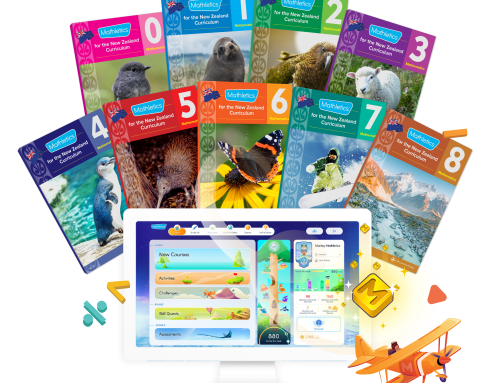
Selected as one of four Ministry-funded maths resources for schools across Aotearoa, it’s a programme built specifically for the Mathematics and Statistics learning area of the New Zealand Curriculum.
It supports structured, explicit teaching with carefully sequenced lessons, clear instructional pathways, and practical support for diverse learners.
Every workbook page, teacher guide and daily lesson plan has been written for the way maths is being taught in New Zealand classrooms today.
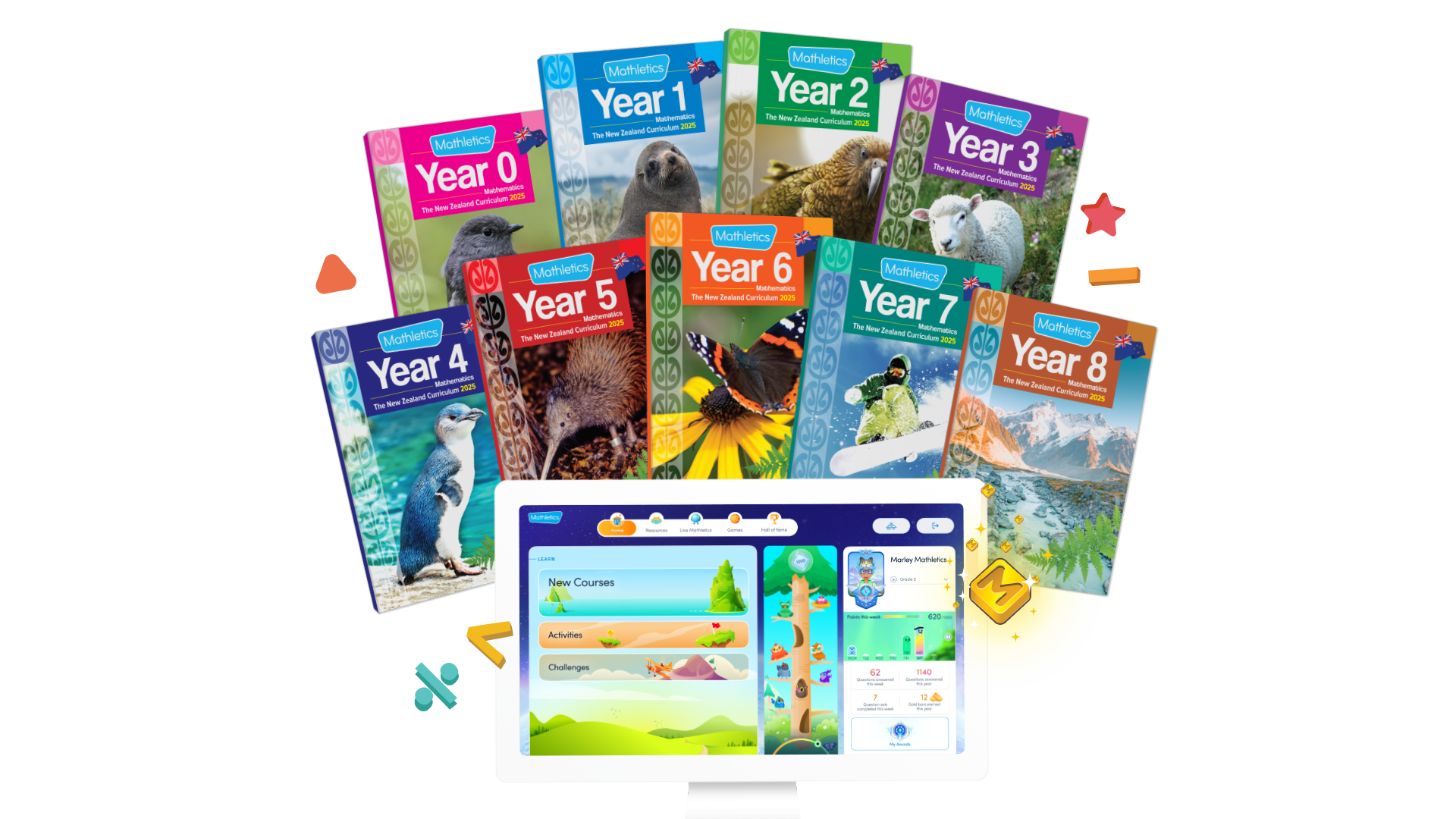
Our whitepaper, The Research and Pedagogical Foundations of the New Zealand Mathletics Programme, takes a deeper look at the evidence and design decisions behind the programme.
Below, we look at six of the foundations it explores.
Step-by-step sequencing that builds understanding
One of the strongest pedagogical principles in the New Zealand Curriculum is sequencing.
Research in mathematics education and cognitive science consistently shows that students learn more effectively when concepts are introduced progressively, connected over time, and revisited cumulatively.
The Mathletics Programme has been designed so students build understanding step-by-step before moving into more abstract application.
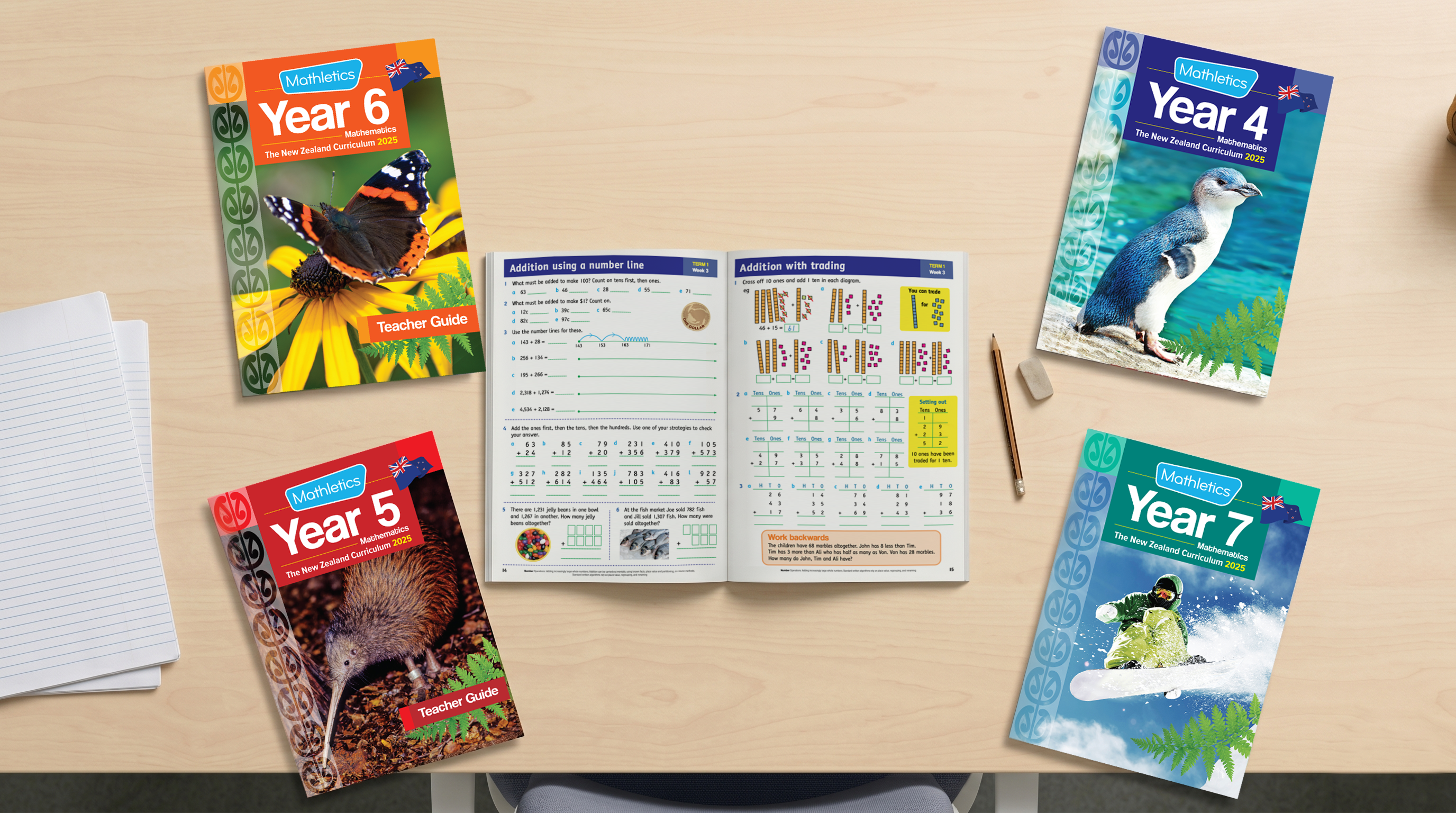
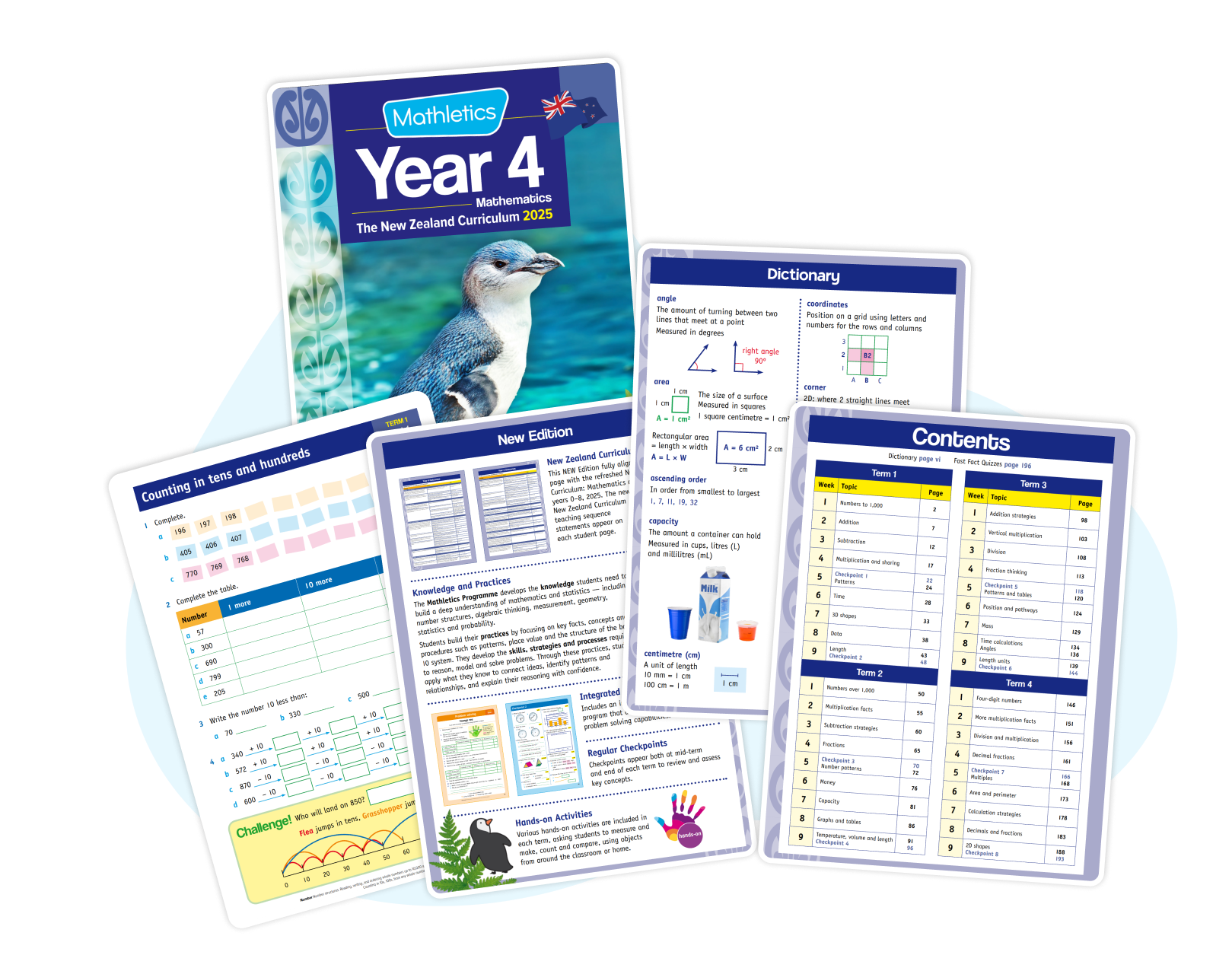
In the Year 4 Addition sequence, for example, students don’t begin with a formal written algorithm.
They first develop flexible mental strategies, an understanding of number relationships, place-value knowledge, visual representations, and regrouping using concrete materials.
Only after this conceptual foundation is established do students move into formal written methods.
This kind of careful sequencing is what helps students understand why mathematical procedures work.
Small, manageable steps that reduce cognitive load
New learning lands more reliably when it’s introduced in small, connected chunks.
This reflects decades of research into Cognitive Load Theory and instructional design, including the work of John Sweller and subsequent Science of Learning research.
It’s directly reflected in the New Zealand Curriculum’s guidance that “explicit teaching takes account of cognitive overload.”
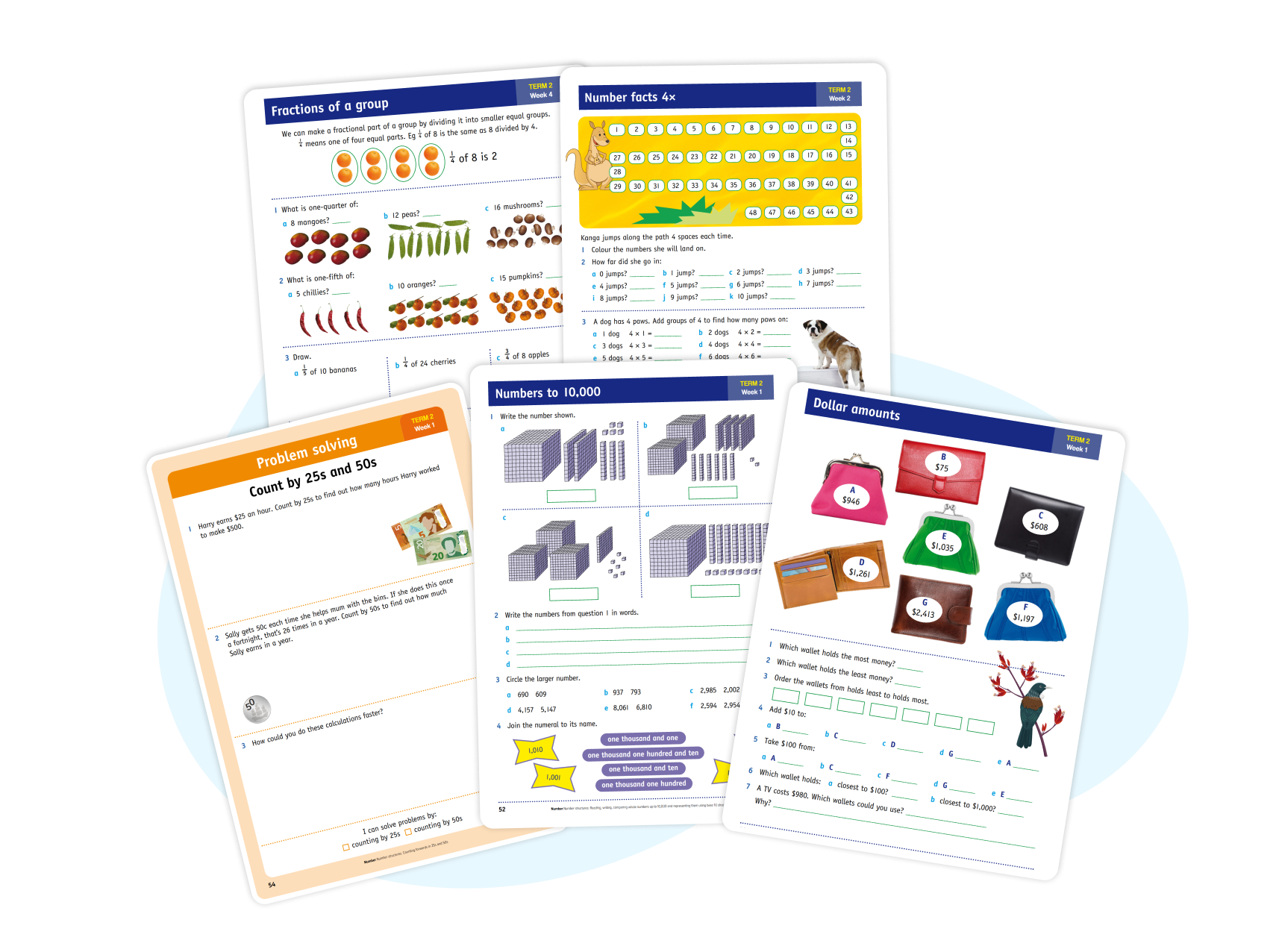
The Mathletics Programme supports this by focusing lessons on one key mathematical idea at a time, using clear worked examples, gradually increasing complexity, and revisiting learning over time.
This helps students sustain attention, build confidence, and experience success before moving into more complex application.
This is particularly important for students who may need additional support, including those new to English, students with learning differences, and those who haven’t yet built strong foundational number knowledge.
Explicit teaching, with gradual release
The whitepaper outlines a structured explicit teaching model that aligns closely with the work of Rosenshine, Archer, and evidence-based explicit instruction research.
The New Zealand Curriculum guidance similarly emphasises clear modelling, guided practice, checking for understanding, and cumulative review.
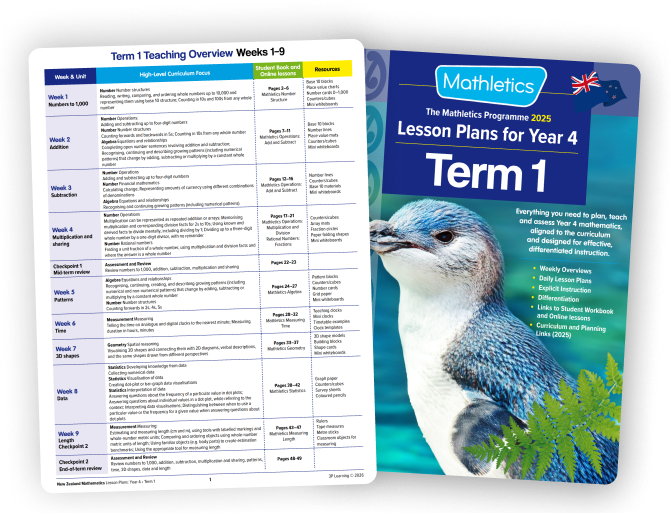
The Mathletics Programme follows the I Do, We Do, You Do model, including teacher modelling, guided practice, and independent application.
Each lesson follows this clear instructional sequence, supporting teachers to teach with confidence and students to learn with clarity.
Critically, the programme supports teachers’ professional judgement rather than replacing it.
Daily lesson plans provide:
- Worked examples
- Questioning prompts
- Mathematical vocabulary
- Sentence stems
- Assessment checkpoints.
And throughout, teachers remain central to the modelling, questioning, responding and adapting that great mathematics teaching requires.
This structure reduces planning burden so teachers can focus on the work that only they can do.
Concrete, visual and abstract understanding
Research consistently shows that students develop deeper mathematical understanding when they move from concrete to visual to abstract representations.
Students in the Mathletics Programme work regularly with number lines, place-value materials, diagrams, measurement models, visual representations, and concrete materials.
Before using formal regrouping in algorithms, for example, students physically and visually model trading with base-ten blocks.
This helps them understand what regrouping represents mathematically, rather than memorising a disconnected procedure.
The result is mathematical understanding that’s built on visual and conceptual foundations.
Mathematical communication and reasoning at the heart of every lesson
The New Zealand Curriculum places strong emphasis on students communicating mathematical thinking, explaining their reasoning, and engaging in mathematical discussion.
This isn’t a soft skill. It’s a core part of how students develop deeper understanding.
The Mathletics Programme supports this through mathematical vocabulary, sentence stems, reasoning prompts, discussion questions, and opportunities to justify strategies and solutions.
Students are encouraged not only to solve problems, but to explain how they solved them, why a strategy works, and which methods are most efficient.
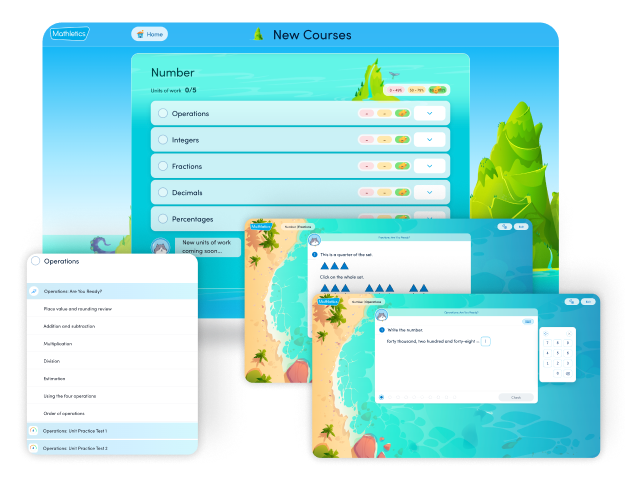
Together with the programme’s online component through Mathletics and Mathseeds (providing immediate feedback and reinforcement), this creates classrooms where mathematics is visible, discussed and deeply understood.
Equity built into the design
The New Zealand Curriculum is grounded in Te Tiriti o Waitangi and a commitment to all students experiencing success in mathematics.
When concepts are clearly modelled, vocabulary is explicitly taught, and learning is broken into manageable steps, more students can access the curriculum with confidence.
Structured, explicit teaching has strong equity foundations because it makes mathematical thinking visible.
This sits alongside culturally responsive practice, not in opposition to it.
The Mathletics Programme provides a clear, structured pathway, while teachers bring the responsiveness, cultural knowledge and professional judgement that make mathematics meaningful for their learners.
Teachers can connect mathematical ideas to students’ lives, local contexts, te reo Māori mathematical vocabulary, and meaningful learning experiences that reflect their classroom community.
Read the full research
Our whitepaper explores each of these foundations in greater depth, including the role of retrieval and reinforcement, how the programme supports differentiation in mixed-ability classrooms, and the full bibliography of research and curriculum sources that shaped its design.
If your school is choosing maths resources for 2027, it’s a substantive look at what’s been built – and why.